|
RenewingMinds
|

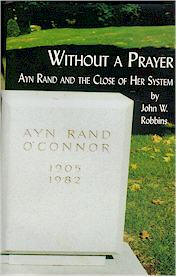
Without a Prayer
By John W. Robbins (1949-2008) |
||
In 1926, a young Russian émigré made her way to Chicago to visit relatives. Fresh from the University of Petrograd, Alissa Zinovievna Rosenbaum desperately wanted to escape the Communists who had captured her country, even if it meant abandoning her family in Russia. Taking a new name from a typewriter (Remington-Rand) and a Nordic novel, Ayn Rand soon made her way to Hollywood and established herself as a screenwriter and playwright. But she quickly turned to writing novels as the most effective vehicle for advancing her ideas. Forty years after publication of her major novel of ideas, Atlas Shrugged, and fifteen years after her death, Ayn Rand remains a best-selling author. Her many books, both fiction and non-fiction, have been read by millions of people, and some of them take her ideas very seriously. Rand has been a major influence on the libertarian and conservative movements in America, and her books are now being distributed worldwide. At least two of Rand's novels--The Fountainhead and We, the Living--have been made into major motion pictures, and Rand's plays have been performed both on and off Broadway for decades. The reaction to Rand's ideas has been largely flattery and denunciation--flattery from those who like her ideas, and denunciation from those who don't. What both factions have failed to provide is precisely what is most needed: a careful analysis of her arguments. Without a Prayer: Ayn Rand and the Close of Her System is the first major book that engages Rand where she wished to be engaged--at the level of philosophical argument. Former disciples and friends have written both unflattering memoirs and flattering puff pieces about Rand, but such works contribute little to an understanding of her ideas. Without a Prayer is unique. It is a careful and thorough examination of Rand's ideas, not her life. |
The standard by which Without a Prayer judges Rand is her own standard: logical precision and consistency. Without a Prayer does not condemn Rand for being "too logical," as some critics have done, for the author is convinced that it is impossible to be too logical, just as it is impossible to be too virtuous or too healthy. Rather, Without a Prayer demonstrates that Rand was not nearly logical enough. Had she been more logical in her writing, she would have advocated ideas opposed to those she actually advanced. Without a Prayer is a meticulous dissection of Rand's arguments in epistemology, metaphysics, ethics, and politics. Whether one agrees or disagrees with Rand's conclusions, Without a Prayer furnishes a clear discussion of them, something neither her friends nor former friends have done.
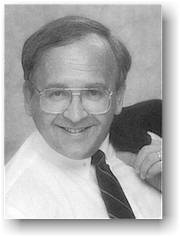
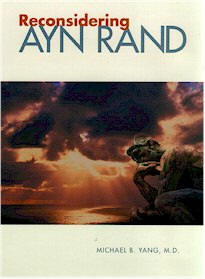
The late John W. Robbins (1949-2008) earned his doctorate at The John Hopkins University, has served as chief of staff to a Member of Congress, has been a college Professor, and was founder and president of The Trinity Foundation and The Freedom School. Also see, Reconsidering Ayn Rand, Dr. Michael Yang.
|
|
One misty winter day [near the end of her life], she [Ayn Rand] stood in front of her living room window, gazing silently at the city veiled in fog. Wearily, she said, "What was it all for?"
|
||
REVIEWS OF THE BOOK
Without a Doubt: A Partial Review of John W. Robbins’ Without A Prayer, by Richard Bacon
August 14, 2008 John W. Robbins, RIP
Eulogy by Gary North
John W. Robbins died on August 14, 2008. He was 59. He received his Ph.D. in political theory under Gottfried Dietze at Johns Hopkins University. He was awarded an M.A. from Johns Hopkins at age 21 and his Ph.D. at age 23. As an undergraduate, he studied political science and also took economics courses under Hans Sennholz at Grove City College.
Robbins was a defender of free market economics. He was disciple of Gordon H. Clark. Clark was famous as a Calvinistic philosopher. He also was an advocate of the free market. He was the author of The Christian View of Men and Things. Robbins devoted much of his career to the republication of Clark's books. He did this through his non-profit Trinity Foundation, which he founded in 1977.
Robbins first came to the attention of libertarians because of his self-published book, Answer to Ayn Rand (1974). He did not object to her defense of the free market. He objected to her epistemology, which rested on atheism. He updated this and gave it a new title, Without a Prayer: Ayn Rand and the Close of Her System, an obvious reference to Bohm-Bawerk's Karl Marx and the Close of His System, the 1896 title applied to the English-language translation of his book on Marx. Robbins devoted much of his career to discussions of epistemology, religion, and atheism.
In the spring of 1976, Robbins was hired by Congressman Ron Paul as his legislative assistant. Paul had been elected to Congress in a midterm election in April. He immediately hired Robbins. In June, he hired me as his research assistant. We were truly the odd couple. Robbins, as a defender of Gordon Clark, was completely hostile to Clark's chief rival, Cornelius Van Til. I am a disciple of Van Til's apologetic method, and I studied for a year under Van Til at Westminster Theological Seminary in the early 1960s. Dr. Paul had no knowledge about the rival positions that Robbins and I represented. I am not sure that he understood fully the extent of our Calvinism. He surely did not know about our rival views of epistemology.
Robbins and I and a secretary occupied a small room in the Longworth Building, far removed from Dr. Paul's main office in the same building. I never did figure out exactly where this little room fit on a map of the Longworth Building. I could get there, but I never figured out which direction I was walking. I only rarely went to the main office. I stuck to my knitting; Robbins stuck to his. I did research on various economic issues; Robbins did research on specific pieces of legislation that were being considered by Congress. Our secretary had no understanding of Calvinism, economics, or politics. She took care of constituent complaints and requests. The room was small. Yet, most of the time, Robbins and I did not talk to each other. Our desks were separated by a divider. We were working on separate projects. He would occasionally come to me and describe some legislative disaster that the House of Representatives was about to consider. He would ask me about what I thought concerning the legislation if it happened to deal with economics. He understood enough about Austrian School economics so that he could handle most of these questions himself. He would then send summaries to Dr. Paul about the legislation.
Anyway, that is what I assumed he did. I never got involved with the specifics of most of the legislation, unless it had something to do specifically with banking. Robbins was tenacious. I have never known anyone more tenacious. He was a bulldog in everything he did. He would size up a piece of legislation, identify why it was tyrannical, and presumably would outline this to Dr. Paul for any speech that Dr. Paul might insert into the Congressional Record. He was not a man to compromise. So, he fit right in. Dr. Paul was never a politician to compromise, either. He still isn't.
Robbins and I left the Federal payroll in January, 1977. Dr. Paul had been defeated by 268 votes out of approximately 180,000 votes the previous November. So, Robbins and I went our separate ways. He set up the Trinity Foundation in 1977. I had already set up the Institute for Christian Economics in 1976. He later returned to Dr. Paul's staff, becoming Chief of Staff, 1981-85. I saw him again briefly at a party honoring Hans Sennholz on his retirement from teaching in 1992. He co-edited a festschrift presented to Sennholz at that meeting, A Man of Principle. I wrote an article for it. Over the years, I would occasionally read one of his essays. Usually, it was directed against Van Til. Some people think that I am controversial. Compared to Robbins, I am a shy pussycat trying to avoid trouble. He and I generally honored an unspoken agreement. I would not respond to anything he wrote, and he would not respond to anything I wrote. I was never particularly interested in the writings of Gordon Clark. This is not because I did not think the Clark was an intelligent philosopher. I was just not interested in the topics he usually wrote about. Robbins, in contrast, carried Clark's war against Van Til.
He also had a long history of challenging other Calvinists and Arminians with equal fervency. He was an equal opportunity bulldog. He was a strong opponent of tax-funded education. He was also a great fan of J. Gresham Machen, the founder of Westminster Theological Seminary in 1936 and a 19th century classical liberal in his economic and political views. Robbins reprinted many of Machen's articles and lectures. He assembled in one book several of Machen's essays against public education, Education, Christianity, and the State. He did not write a book on political theory. I often wondered what he would say about the history of political theory. Of all the people I have ever known whose book on the history of political theory I would have been most likely to read, it would have been his.
The two of us did not stay in academia. I quit the only full-time teaching job I ever had at the collegiate level after one semester. I never looked back. It was one of my better decisions. He taught briefly at a small private college in Hobbs, New Mexico. His main legacy will be the books written by Clark which he reprinted. That project absorbed much of his time and the money he raised.
 Mail this article to a friend
- SEATED
- ASCENDED
- RAISED
- BURIED
- CRUCIFIED